
Ronald Ross Memorial, Calcutta (Kolkata)

standard

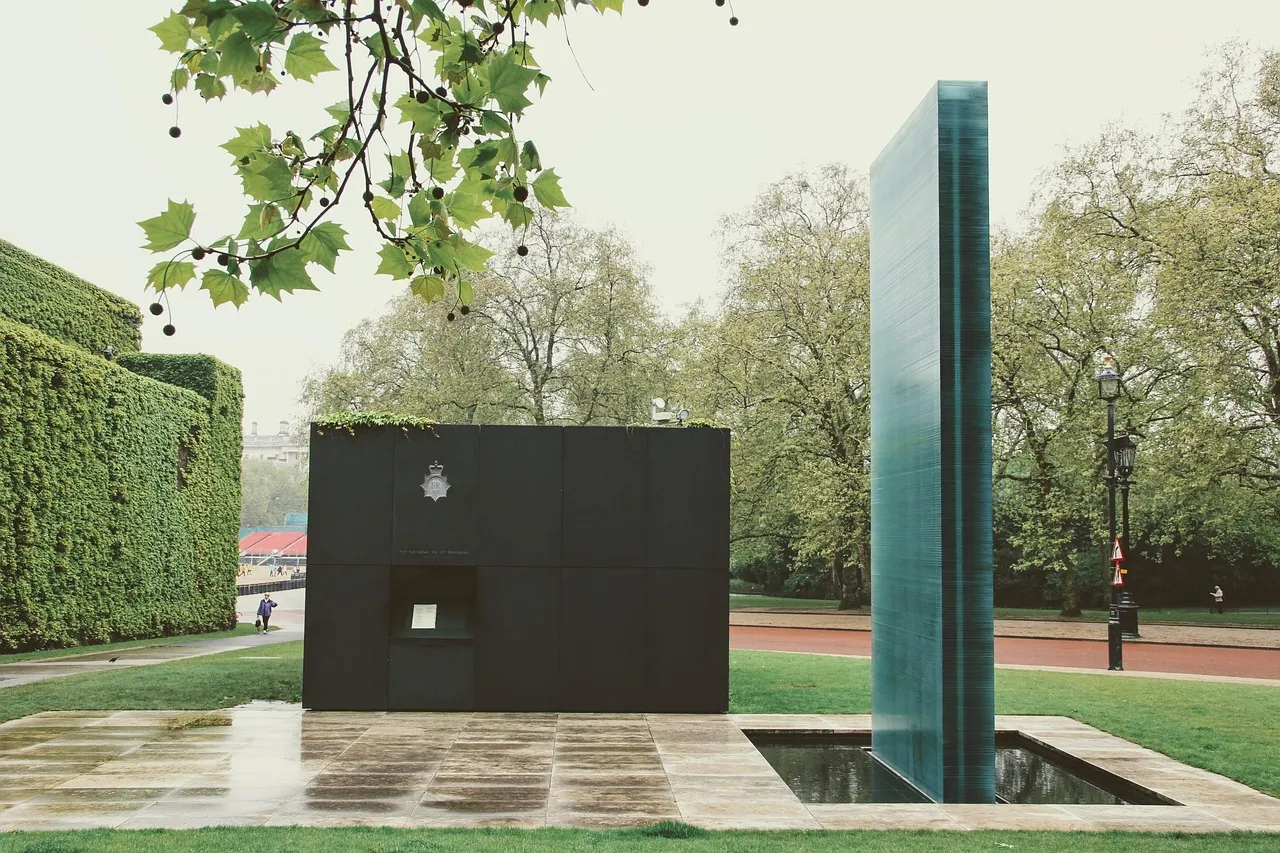
Ronald Ross Memorial, Calcutta (Kolkata)

Located on the Northern wall of the Presidency General (PG) Hospital, lies a arch shaped memorial dedicated to Ronald Ross, Nobel Prize winner of Medicine in 1902.

Ronald Ross (1857 – 1932) studied malaria from 1881 to 1899. Finally on 20th August , working at the PG hospital discovered that malaria was transmitted by female anopheles mosquito. 20th August is celebrated as the “World Mosquito Day.”

370 total views, no views today
standard

Dadasaheb Phalke

Dhundiraj Govind Phalke, popularly known as Dadasaheb Phalke, (30 April 1870 – 16 February 1944) was an Indian producer-director-screenwriter, known as the father of Indian cinema. Starting with his debut film, Raja Harishchandra in 1913, now known as India’s first full-length feature, he made 95 movies and 26 short films in his career spanning 19 years, till 1937, including his most noted works: Mohini Bhasmasur (1913), Satyavan Savitri (1914), Lanka Dahan (1917), Shri Krishna Janma (1918) and Kaliya Mardan (1919).

The Dadasaheb Phalke Award, for lifetime contribution to cinema, was instituted in his honour by the Government of India in 1969. The award is one of the most prestigious awards in Indian cinema and is the highest official recognition for film personalities in the country. A postage stamp, bearing his face, was released by India Post to honour him in 1971. A variant, honorary Award from The Dadasaheb Phalke Academy Mumbai was Introduced in the year 2001, for lifetime achievement in Indian cinema.

Dhundiraj Govind Phalke was born in a deshastha Brahmin Marathi family on 30 April 1870 at Tryambakeshwar, 30 km from Nashik, Maharashtra, India, where his father was an accomplished scholar.

He joined Sir J. J. School of Art, Mumbai in 1885. After passing from J.J. School in 1890, Phalke went to the Kala Bhavan in Baroda, where he studied sculpture, engineering, drawing, painting and photography.

He began his career as a small town photographer in Godhra but had to leave business after the death of his first wife and child in an outbreak of the bubonic plague. He soon met the German magician Carl Hertz, one of the 40 magicians employed by the Lumiere Brothers. Soon after, he had the opportunity to work with the Archeological Survey of India as a draftsman. However, restless with his job and its constraints, he turned to the business of printing. He specialised in lithography and oleograph, and worked for painter Raja Ravi Varma. Phalke later started his own printing press, made his first trip abroad to Germany, to learn about the latest technology, machinery and for art also.

Following a dispute with his partners about the running of the press, he gave up printing and turned his attention to moving pictures, after watching a silent film, The Life of Christ and envisioning Indian gods on the screen. Phalke made his first film, Raja Harishchandra, in 1912; it was first shown publicly on 3 May 1913 at Mumbai’s Coronation Cinema, effectively marking the beginning of the Indian film industry. Around one year before, Ramchandra Gopal (known as Dadasaheb Torne) had recorded on stage a film drama called Pundalik and shown recording at the same theatre. However, the credit for making the first indigenous Indian feature film is attributed to Dadasaheb Phalke as it is said that “Pundalik” had British cinematographers.

Once again, Phalke proved successful in his new art and proceeded to make several silent films, shorts, documentary feature, educational, comic, tapping all the potential of this new medium. Film, having proved its financial viability, soon attracted businessmen who favoured money over aesthetics.

Phalke formed a film company, Hindustan Films in partnership with five businessmen from Mumbai, in the hope that by having the financial aspect of his profession handled by experts in the field, he would be free to pursue the creative aspect. He set up a model studio and trained technicians, actors but, very soon, he ran into insurmountable problems with his partners. In 1920, Phalke resigned from Hindustan Films, made his first announcement of retirement from cinema, and he wrote Rangbhoomi, an acclaimed play. Lacking his extremely imaginative genius, Hindustan Films ran into deep financial loss, and he was finally persuaded to return. However, Phalke felt constrained by the business and, after directing a few films for the company, he withdrew it.

The times changed and Phalke fell victim to the emerging technology of sound film. Unable to cope with the talkies, the man who had fathered the Indian film industry became obsolete. His last silent movie Setubandhan was released in 1932 and later released with dubbing. During 1936–38, he produced his last film Gangavataran (1937), before retiring to Nashik, where he died on 16 February 1944.

Selected filmography
Raja Harishchandra (1913)
Lanka Dahan (1917)
Shri Krishna Janma (1918)
Kaliya Mardan (1919)
Setu Bandhan (1932)
Gangavataran (1937)
“Mohini Bhasmasur” (1913)
“Savitri Satyavan” (1914)
In popular culture
In 2009, the Marathi film Harishchandrachi Factory, which was directed by theatre veteran Paresh Mokashi and depicts Dadasaheb Phalke’s struggle in making Raja Harishchandra in 1913, was selected as India’s official entry to the Academy Awards in the Best Foreign Language Film category.

Family
He has three great grand sons, two among them are settled in Mumbai.
Amitabh Bachchan unveils Dadasaheb Phalke mural

Amitabh Bachchan unveils Dadasaheb Phalke mural.

295 total views, no views today

standard

Sri Sri (writer)

Srirangam Srinivasarao (30 April 1910 – 15 June 1983), popularly known as Sri Sri, was a Telugu poet and lyricist. He was a member of PEN INDIA, Sahitya Academy, Vice-President of the South Indian Film Writers Association, Madras and President of the revolutionary writers association of Andhra. He was also awarded the Soviet Land Nehru Award of India.

Srirangam Srinivasa Rao, popularly known as Sri Sri, was born on 30 April 1910 in Visakhapatnam. Sri Sri completed his education in the same school in which his father Sri Venkata Ramaiah was working as a mathematics teacher. He married Ms. Venkata Ramanamma at an age of 15 and adopted a girl child. Later on he married Ms. Sarojini and was blessed with a son and Three daughters.Son Venkat and Daughters are Manjula, Mangala and Mala.

He went to Madras for his higher studies in 1928 and completed them by 1931. In 1938, he joined as a sub editor of ‘Andhra Prabha’ daily newspaper. He later on worked for All India Radio and armed forces. He is a major radical poet (e.g. prabhava) and novelist (e.g. Veerasimha Vijayasimhulu). He introduced free verse into his socially concerned poetry through Maha Prasthanam. He wrote visionary poems in a style and metre not used before in Telugu classical poetry. He moved poetry forward from traditional mythological themes to reflect more contemporary issues.

He entered into Telugu cinema with Ahuti(1950), a Telugu dubbed version of Junnarkar’s Neera aur nanda(1946). Some of the songs Hamsavale O Padava, Oogisaladenayya, Premaye janana marana leela, scored by Saluri Rajeswara Rao, were major hits.

Srirangam Srinivasa Rao was the first true modern Telugu poet to write about contemporary issues that affected day-to-day life of a common man in a style and metre which were not used in classical Telugu poetry. He wrote visionary poems in a style and metre not used before in Telugu classical poetry. He moved poetry forward from traditional mythological themes to reflect more contemporary issues.

His book Maha Prasthanam (The Great Journey), an anthology of poems, is one of his major works. Other major works include Siprali and Khadga Srushti (“Creation of the Sword”).

Sri Sri was a screenwriter for several Telugu films. He was one of the best film song writers in India, he has penned lyrics for over 1000 soundtracks in Telugu. He was a great asset to the Telugu film industry.

155 total views, no views today

standard

Shrinivas Khale

Pandit Shrinivas Vinayak Khale (30 April 1926 – 2 September 2011), fondly addressed as “Khale Kaka”, was an Indian composer/music director from Maharashtra, India. He hailed from Baroda (Vadodara), the cultural capital of Western India. I was initially trained at the hisotric Music college (now the Faculty of Performing Arts of the Maharaja Sayajirao University of Baroda) and did Diploma in Vocal Music. He was greatly inspired by the legendary musician of Agra Gharana Aftab e Mousiqui Ustad Faiyazkhansaheb. Shrinivas Khale was trained by Gayanacharya Pandit Madhusudan Joshi of Agra-Atrauli gharana, a leading disciple of Ut. Ata Hussain Khan and Ut. Faiyaz khan.

He was one of the most respected artists in the Marathi music industry for over six decades. He is the recipient of Padma Bhushan award in 2010.

On behalf of Hridayesh Arts, an annual award called the Swar Shrinivas Puraskar has been instituted. The first recipient being Kamlesh Bhadkamkar who has spent 12 years as a music composer and worked closely with Kaka himself.

Although, Khale primarily composed music for the Marathi film industry, he composed music in other Indian languages as well—namely Hindi, Bengali, Gujrati and Sanskrit. He recorded 141 poems and composed music for six Marathi films (Yanda Kartavya Ahe–1956, Bolki Bahauli–1961, Palsala Pane Teen–year not known, Jivhala–1968, Porki–1970, and Sobati–1971 ; A film Laxmi Pujan–1952 was never released). He also provided music to theatrical plays Paanigrahan, Vidushak and Devache paay during his stint in Akashwani, Mumbai.

Kaka was also the only musician to pitch together two Bharat Ratna recipient singers, Lata Mangeshkar and Pandit Bhimsen Joshi for a Hindi bhajan (devotional song) album Ram Shyam Gun Gaan. His last album “Nath Maza Mi Nathancha” was released in September 2009 which includes Abhangas and Bhaktigeetas by Saint Krishnadas. Among his disciples is noted music composer and singer Shankar Mahadevan.

Khale was born in a Chandraseniya Kayastha Prabhu family, having origins from Parali village in Kokan-Raigad zilla, Maharashtra, India. His father was Vinayak Kashinath Khale, and mother was Laxmi Vinayak Khale. His elder brother, Kashinath Khale, influenced his choice of a career in music.

Honors
(2012) Hridayesh Arts by Hridyanath Mangeshkar, Mangesh Padgaonkar, Yeshwant Dev and his disciples (in honor of 1st anniversary)
(2012) Swar Gandhar Pratisthan and Thane Viraat Samajik & Sanskrutik Manch (in honor of 1st anniversary)
(2011) Hridayesh Arts by Shri. Sushil Kumar Shinde
(2010) Shankaracharya, Sawan Kumar Tak (director), Governor of Maharashtra K. Shankarnarayanan at Raj Bhavan, Mumbai
(2010) BK Bhagat Pratishthan members of Thane
(2008) Mr. Kumar Ketkar, chief editor of Loksatta (marathi newspaper) and Hridayesh Arts
(2006) Dainik Lokmat by Mr Vilasrao Deshmukh
(2005) Ram Gabale (marathi film director)
(2005) Hridayesh Arts by Bharat Ratna Gansamradni Lata Mangeshkar
(2000) Atharva Pratishthan by Shiv Sena Pramukh Shri Balasaheb Thakrey
(1995) Suvarna Tabakadi / Golden Disc by Shri Naushad Ali through Hridayesh Arts
(1993) Shrimati Lata Mangeshkar Puraskar from Governor of Maharashtra P.C.Alexander at Raj Bhavan, Mumbai
(1991) Swaryatri Samaj Gaurav by Guruprathistan Mumbai on Doordarshan
Awards
(2010) Padma Bhushan Awards (2010–2019)[1] (2010) Big Marathi Music Award for “Best Music Director”[6][7] (2009) Sarva Shreshtha Puraskar
(2008) Swarna Ratna Puraskar and Music Director Datta Davjekar Puraskar
(2007) Sangeet Ratna Puraskar
(2007) Worldspace honour for outstanding contribution to Marathi music as Composer
(2006) Jeevan Gaurav Puraskar
(2003) Dadasaheb Phalke Trust Award
(2003) Samanvay Pratishthan Puraskar, Sudhir Phadke Puraskar, Bal Gandharva Puraskar
(2000) Mahalaxmi Puraskar
(1995) Golden Disc for completing 50 years in field of music
(1993) Lata Mangeshkar Award
(1970) Sur Sringar Puraskar

355 total views, 5 views today

standard

Dorjee Khandu

Dorjee Khandu (19 March 1955 – 30 April 2011) was an Indian politician belonging to the Indian National Congress. He was the sixth Chief Minister of Arunachal Pradesh. He was reelected in 2009 general elections for the second term as the chief minister. Khandu died in a helicopter crash near Sela Pass on 30 April 2011.

Dorjee Khandu was born in Gyangkhar Village in Tawang district, North East Frontier Agency, India to Leki Dorjee. He belongs to the Monpa tribe.

Dorjee Khandu was in the Indian Army Intelligence Corps and worked there for more than seven years. He received a gold medal for the meritorious intelligence services rendered during Bangladesh War. Later, he was engaged in social activities for village people of Tawang District and looked after their welfare up till 1980. In 1980, he was selected uncontested as the First ASM and worked in same capacity till 1983.

1982: Chairman, Culture and Co-operative Societies in those years. Due to enthusiastic efforts, cultural and co-operative societies established in Tawang and lead the cultural troupe representing Arunachal Pradesh in Delhi for ASIAD in 1982 and won silver medal for good performance.
1983–87: Elected uncontested as District Vice President, West Kameng District Zilla Parishad 1983–87.
1987–1990: Engaged in intensive social works and brought water supply, electricity, communication, schools, religious institutions etc. to far flung villagers from 1987 to 1990.

In March 1990, he was elected uncontested to the First Legislative Assembly of the State of Arunachal Pradesh from Thingbu-Mukto constituency. In March 1995, he was re-elected to Second Legislative Assembly of the State of Arunachal Pradesh from the same constituency. He became the Minister of State for Cooperation from 21 March 1995.

On 21 September 1996, he became the Cabinet Minister for Animal Husbandry & Veterinary, Dairy Development.
In 1998, he was the Minister of Power from 1998–2006.
In October 1999, he was elected to third Legislative Assembly of the State of Arunachal Pradesh. He was the Minister for Mines, Relief & Rehabilitation from 15 October 2002 to 27 July 2003.
On 28 July 2003, he became the Minister for Relief & Rehabilitation and Disaster Management.
In 2004, he was re-elected unopposed from Mukto constituency in the Arunachal Pradesh Legislative Assembly elections and became the minister for Power, NCER, and relief and rehabilitation.

On 9 April 2007, he became the Chief Minister of the state, replacing Gegong Apang. In 2009, he was again elected unopposed from the same constituency and sworn in as the Chief Minister of the state on 25 October 2009.

On 30 April 2011, the helicopter carrying Khandu and four other people on a trip from Tawang to Itanagar disappeared. On 2 May, the aerial search for Khandu was halted due to inclement weather, necessitating a move to ground search by the Indian Army, police, SSB and the Indo-Tibetan Border Police. Personnel were searching a heavily forested 66 square kilometer section of West Kameng district, where satellites detected possible plane remnants. Witnesses said they heard a large explosion on the morning of 30 April.

On 4 May 2011, at around 11 am, remnants of the crashed helicopter were found by a group of tribals near Tawang district. Although the crash has been blamed on the poor condition of the helicopter, a single engine four seater Eurocopter B8 provided by Pawan Hans, the helicopter was only put into service in 2010.

P Chidambaram, Home Minister of India confirmed the news of the death of Dorjee Khandu on the morning of 5 May. Earlier in a briefing Minister of External Affairs, SM Krishna said he is deeply pained by the demise of Dorjee Khandu.

The last rites of the Chief Minister were performed in his native village, Gyangkhar, in Tawang district as per Monpa Buddhist traditions.

Dorjee Khandu had four wives and has five sons and two daughters.

375 total views, no views today

standard

Achala Sachdev

Achala Sachdev (3 May 1920 – 30 April 2012) was an Indian film actress from Peshawar who started her career as a child actor. She later became known for mother and grandmother roles in Hindi films. Her most memorable roles were as Balraj Sahni’s wife in 1965 film Waqt and Kajol’s grandmother in Dilwale Dulhania Le Jayenge (1995).

Sachdev was born in Peshawar in 1920.

Achala worked for All India Radio, Lahore before Indian partition and then at Delhi All India Radio. Achala made her film debut with Fashionable Wife (1938), and acted in over 130 Hindi films. She has acted in many Yash Raj Films, starting with Yash Chopra’s first production Daag: A Poem of Love (1973) and films like Chandni (1989) and Dilwale Dulhania Le Jayenge (1995). Her other noted films were Prem Pujari, Mera Naam Joker, Hare Rama Hare Krishna and Andaz, apart from acting in English films like the Mark Robson’s Nine Hours to Rama (1963) and Merchant Ivory’s The Householder (1963). However her most noted role remained of as Balraj Sahani’s wife in the Waqt (1965), where in the hit song Ae Meri Zohra Jabeen was picturised with her.

Achala became a resident of Pune after marrying Clifford Douglas Peters who had a factory in Pune’s Bhosari industrial estate named Morris Electronics, producing small electronics parts like diodes. The factory was later sold to Piramal Group. Achala has one child, son Jyotin from her first marriage who lives in the US, two grandchildren and one grandson.

In September 2011, Achala slipped and fell in her kitchen. She sustained a fracture in her leg. After that, she was diagnosed with multiple emboli in her brain. This resulted in total paralysis and the loss of her vision. She was survived by son Jyotin.

Selected filmography
Waqt
Na Tum Jaano Na Hum (2002)
Kabhi Khushi Kabhie Gham (2001)
Dahek (1999)
Dil Kya Kare (1999)
Dilwale Dulhania Le Jayenge (1995)
Chandni (1989)
Love & God (1986)
Mangal Dada (1986)
Tumhari Kasam (1978)
Amaanat (1977)
Chailla Babu (1977)
Chandi Sona (1977)
Karm (1977)
Laila Majnu (1976)
Julie (1975)
Trimurti (1974)
Geeta Mera Naam (1974)
Kora Kagaz (1974) – Mrs. Gupta (as Achla Sachdev)
Parinay (1974)
Anamika (1973)
Daag: A Poem of Love (1973)
Hanste Zakhm (1973)
Kal Aaj Aur Kal (1971)
Paraya Dhan (1971)
Albela (1971)
Andaz (1971)
Chahat (1971)
Hare Rama Hare Krishna (1971)
Heer Ranjha (1970)
Mera Naam Joker (1970)
Pavitra Paapi (1970) … Maya
Prem Pujari (1970)
Bandhan (1969)
Aadmi Aur Insaan (1969)
Juari (1968)
Kanyadaan (1968)
Mere Hamdam Mere Dost (1968)
Sapno Ka Saudagar (1968)
Hamraaz (1967)
Shagird (1967)
Dil Ne Pukara (1967)
Aag (1967)
Akashdeep (1965)
Bahu Beti (1965)
Himalaya Ki God Mein (1965)
Janwar (1965)
Mere Sanam (1965)
Waqt (1965)
Arzoo (1965)
Chitralekha (1964)
Haqeeqat (1964)
Raaj Kumar (1964)
Sangam (1964)
Shagun (1964)
Dil Ek Mandir (1963)
Meri Surat Teri Ankhen (1963)
Manmauji (1962)
Mehandi Lagi Mere Haath (1962)
Jhoola (1962)
Salam Memsaheb (1961)
Sampoorna Ramayana (1961)
Nazrana (1961)
Chhote Nawab (1961)
Shravan Kumar (1960)
Zameen Ke Tare (1960)
Manzil (1960)
Kalpana (1960)
Angulimaal (1960)
Char Dil Char Rahen (1959)
Adalat (1958)
Miss Mary (1957)
Pardesi (1957)
Hum Panchi Ek Daal Ke (1957)
Bandhan (1956)
Sabse Bada Rupaiya (1955)
Naukri (1954)
Munna (1954)
Chandni Chowk (1954)
Foot Path (1953)
Rahi (1952)
Anhonee (1952)
Maa (1952)
Resham (1952)
Sheesha (1952)
Kashmir (1951)
Shokiyan (1951)
Kashmir (1951)
Dilruba (1950)
Fashionable Wife (1938)

335 total views, no views today

standard

Khaled Choudhury

Khaled Choudhury (20 December 1919 – 30 April 2014) was a theatre personality and artist of Bengal. He worked for various directors of both Bengali and Hindi plays, including Sombhu Mitra, Tripti Mitra, and Shyamanand Jalan in various capacities – creating the Stage, sets and costumes and later as Music Director. He is a bachelor. Presently, he resides in Kolkata, India. He has been awarded the Padma Bhushan for his contribution to theatre in India’s Republic Day Honours List on 26 January 2012. He died on 30 April 2014 in Kolkata.

Khaled Choudhury was born on 20 December 1919 in Karimganj, which was then in undivided Assam, a State of British India. His father was Chandranath Dutta Choudhury and his mother was Hem Nalini. His grandmother’s brother, Gurusaday Dutt, had named him Chirakumar, but his father later changed the name to Chiraranjan Dutta Choudhury. This name he changed in 1943 to Khaled Choudhury (though he did not change his religion), as a consequence of strained relationship with his father. He moved to Kolkata (then Calcutta) in 1945. He died there after an illness on 30 April 2014.

In 1945, he joined the Bharatiya Gananatya Sangha (Indian People’s Theatre Association). His contributions in the form of artistic talent in the fields of drawing, painting and music (both folk and western) enabled him to be involved in Shahider Daak, a shadow theatre in 1947. He joined Bohurupee in 1953. List of plays in which Khaled Choudhury had been involved primarily as Stage Director are:

Bohurupee Productions
1953 Dharmaghat directed by Sombhu Mitra;
1954 Rakta Karabi directed by Sombhu Mitra, as Music & Stage Director as well as Costumes Director;
1955 Swargiya Prahasan directed by Amar Gangopadhyay;
1955 Angshidaar directed by Amar Gangopadhyay;
1957 Daakghar directed by Tripti Mitra;
1958 Putul Khela directed by Sombhu Mitra;
1969 Barbar baanshi directed by Sombhu Mitra;
1970 Kingbadanti directed by Tripti Mitra;
1971 Pagla Ghora directed by Sombhu Mitra;
1972 Gandaar directed by Tripti Mitra;
1988 Jajaati directed by Kumar Roy;
Calcutta Theatre Productions
1959 Gotraantar directed by Bijon Bhattacharya;
1966 Debigarjan directed by Bijon Bhattacharya;
Theatre Unit Productions
1960 Krishnachura directed by Shekhar Chattopadhyay;
1964 Julius Caesar (Bengali) directed by Shekhar Chattopadhyay;
1969 Janmabhumi directed by Shekhar Chattopadhyay, as Music & Stage Director as well as Costumes Director;
Mukhosh Theatre Centre Productions
1960 Rajanigandhaa directed by Tarun Ray;
1960 Aar hobey na deri directed by Tarun Ray;
Nakshatra Productions
1960 Amrita Athith directed by Shyamal Ghosh;
Shishu Natya Sangha Productions
1961 Bisarjan directed by Narayan Bhattacharya;
Group Theatre Productions
1961 Strir Patra directed by Gita Bandopadhyay;
1962 Noey Chhoey directed by Gita Bandopadhyay;
Nandikar Productions
1961 & 1976 Saodagarer Nauko directed by Radharaman Tapadar;
1988 Sesh Sakkhatkar directed by Rudraprasad Sengupta;
1993 Feriwalar Mrityu directed by Rudraprasad Sengupta;
1995 Meghnadbadh Kabya directed by Gautam Haldar;
Anaamika Productions
1961 Ghar aur bahar (Hindi) directed by Shyamanand Jalan;
1967 Saanp uttara (Hindi) directed by Shiv Kumar Joshi;
1967 Shuturmurg (Hindi) directed by Shyamanand Jalan;
1968 Chhapte Chhapte (Hindi) directed by Shyamanand Jalan;
1968 Sacchhayi kya hai (Hindi) directed by Shyamanand Jalan;
1968 Evam Indrajeet (Hindi) directed by Shyamanand Jalan;
1969 Mere Bacche (Hindi) directed by Shiv Kumar Joshi;
1969 Vallabhpur ki roopkatha(Hindi) directed by Krishna Kumar;
1970 Aadhe Adhure (Hindi) directed by Shyamanand Jalan;
1971 Pagla Ghora (Hindi)directed by Shyamanand Jalan;
1971 Steel frame (Hindi)directed by Pratibha Agrawal;
1978 Surdas (Hindi)directed by Pratibha Agrawal;
Rupakar Productions
1962 Kaaler Jatra directed by Sabitabrata Datta;
Khelaghar Productions
1962 Chokher Bali directed by Bonani Choudhury;
Anukar Productions
1967 Singhasaner Khoyrog directed by Dwipen Sengupta;
Pujarinir Asar Productions
1969 Ankamalar deshe directed by Samir Chattopadhyay;
Aadakaar Productions
1969 Nishaad (Hindi) directed by Krishna Kumar;
Bangla Naatmancha Pratistha Samiti
1970 Laalan Fakir directed by Sabitabrata Dutta;
1971 Mudra Raakshash directed by Ajitesh Bandopadhyay;
1972 Tughlaq directed by Shyamanand Jalan;
Bharatiya Gananatya Sangha(Indian People’s Theatre Assn)
1970 Professor Mamlock directed by Ranajit Sinha;
1998 Singhasan directed by Pankaj Munshi;
Shaoli Mitra
1971 Terrodactil directed by Tripti Mitra;
Rabitirtha Productions
1973 Chandaalika directed by Suchitra Mitra;
Rangakarmee Productions
1981 Guriya Ghar directed by Tripti Mitra;
Calcutta Puppet Theatre
1982 Ramayan(for children) directed by Suresh Datta;
Aarabdha Natya Vidyalaya
1984 Raktakarabi directed by Tripti Mitra;
1984 Doorasha directed by Tripti Mitra;
Theatre Workshop
1984 Bisarjan directed by Bibhas Chakraborty;
1991 Bera directed by Ashoke Mukhopadhyay;
1994 Eka ebong eka directed by Ashoke Mukhopadhyay;
1996 Saodagarer Nauko directed by Ashoke Mukhopadhyay;
Sangbarta
1984 Dragonbodher pala directed by Sunil Das;
Ensemble
1989 Uttaraadhikaar directed by Sohaag Sen;
1994 Uttarpurush directed by Sohaag Sen;
Sundaram Productions
1989 Alakanandar Putrakanya directed by Manoj Mitra;
1991 Shobhajatra directed by Manoj Mitra;
1994 Galpa Hekim Saheb directed by Manoj Mitra;
1998 Chhayar prasad directed by Manoj Mitra;
Samikkhan Productions
1990 Mrichhakatik directed by Pankaj Munshi;
1997 Antaraal directed by Pankaj Munshi;
2000 Swapna Ujaan directed by Pankaj Munshi;
Gandhar Productions
1992 Takhan Bikel directed by Ashit Mukhopadhyay;
Nibha Arts
1992 Darpane Saratsashi directed by Soumitra Chattopadhyay;
Theatrewala Productions
1993 Kaacher Dewaal directed by Biplabketan Chakraborty;
Patent Theatre Productions
1994 Third bell directed by Nirmalya Sengupta;
1996 Nihata Chaitanya directed by Rana Chattopadhyay;
Rangaroop Productions
1994 Je jon aache Maajhkhaane directed by Seema Mukhopadhyay;
Choopkatha Productions
1995 Aakorik directed by Ashit Mukhopadhyay;
1997 Janmadin directed by Ashit Mukhopadhyay;
Saayak Productions
1996 Karnaabati directed by Meghnad Bhattacharya;
1997 Dui Hujurer Galpo directed by Meghnad Bhattacharya;
Kalyani Natyacharcha Kendra
1997 Chilekothar Sepai directed by Gautam Haldar;
2000 Nakshi Kaanthar Maath directed by Gautam Haldar;
Anubhaas Productions, Howrah
1999 Apurbo golap directed by Sekhar Sammaddar;

Khaled Choudhury got involved with folk music and folk-lore research in the 1960s. He was Secretary of the Folk Music and Folklore Research Institute at its inception in 1965, which collected a lot of folk music from eastern India. This entire collection was subsequently donated to the Lokasanskriti o Adivasisanskriti Kendra (Centre for Folk and Adivasi Culture), Govt. of West Bengal.

355 total views, no views today

standard

Alfred Hitchcock

Born in London on August 13, 1899, Alfred Hitchcock worked for a short time in engineering before entering the film industry in 1920. He left for Hollywood in 1939, where his first American film, Rebecca, won an Academy Award for best picture. Hitchcock created more than 50 films, including the classics Rear Window, The 39 Steps and Psycho. Nicknamed the “Master of Suspense,” Hitchcock received the AFI’s Life Achievement Award in 1979. He died in 1980.

Director, producer and screenwriter Alfred Joseph Hitchcock was born in London, England, on August 13, 1899, and was raised by strict, Catholic parents. He described his childhood as lonely and sheltered, partly due to his obesity. He once said that he was sent by his father to the local police station with a note asking the officer to lock him away for 10 minutes as punishment for behaving badly. He also remarked that his mother would force him to stand at the foot of her bed for several hours as punishment (a scene alluded to in his film Psycho). This idea of being harshly treated or wrongfully accused would later be reflected in Hitchcock’s films.

Hitchcock attended the Jesuit school St. Ignatius College before going on to attend the University of London, taking art courses. He eventually obtained a job as a draftsman and advertising designer for the cable company Henley’s. It was while working at Henley’s that he began to write, submitting short articles for the in-house publication. From his very first piece, he employed themes of false accusations, conflicted emotions and twist endings with impressive skill. In 1920, Hitchcock entered the film industry with a full-time position at the Famous Players-Lasky Company designing title cards for silent films. Within a few years, he was working as an assistant director.

In 1925, Hitchcock directed his first film and began making the “thrillers” for which he became known the world over. His 1929 film Blackmail is said to be the first British “talkie.” In the 1930s, he directed such classic suspense films as The Man Who Knew Too Much (1934) and The 39 Steps (1935).

In 1939, Hitchcock left England for Hollywood. The first film he made there, Rebecca (1940), won an Academy Award for best picture. Some of his most famous films include Psycho (1960), The Birds (1963) and Marnie (1964). His works became renowned for their depictions of violence, although many of his plots merely function as decoys meant to serve as a tool for understanding complex psychological characters. His cameo appearances in his own films, as well as his interviews, film trailers and the television program Alfred Hitchcock Presents (1962-65), made him a cultural icon.

Hitchcock directed more than 50 feature films in a career spanning six decades. He received the American Film Institute’s Life Achievement Award in 1979. One year later, on April 29, 1980, Hitchcock died peacefully in his sleep in Bel Air, California. He was survived by his lifetime partner, assistant director and closest collaborator, Alma Reville, also known as “Lady Hitchcock,” who died in 1982.

420 total views, 5 views today

standard

Alla Rakha

Ustad Qureshi Alla Rakha Khan (29-April 1919 – 3 February 2000), popularly known as Alla Rakha, was an Indian tabla player. He was a frequent accompanist of Ravi Shankar.

Alla Rakha was born Ghagwal, Jammu and Kashmir, British India. His mother tongue was Dogri. He became fascinated with the sound and rhythm of the tabla at the age of 12, while staying with his uncle in Gurdaspur. Finding little chances for grooming and appreciation, the determined young lad ran away from home, became a disciple of and began studying tabla with Mian Kader Baksh of the Punjab gharana.

He studied voice and Raag Vidya under Ashiq Ali Khan of the Patiala gharana. His regimen of practice and dedication were legendary: hours upon hours of hard, disciplined practice, that would later pay off.

He was married to Bavi Begum, and had three sons, Zakir Hussain, Fazal Qureshi and Taufiq Qureshi, a daughter Khurshid Aulia née Qureshi, and nine grandchildren. Alla Rakha had another daughter, Razia, whose death preceded his by less than 24 hours. He also married a lady belonging to Faisalabad, Pakistan. Rohi Bano, a popular TV actress in 1980s, was his daughter from this wedlock. She is still alive. He had another brother called Sabir who practised tabla in Lahore.

Alla Rakha began his career as an accompanist in Lahore and then as an All India Radio staffer in Bombay in 1940, playing the station’s first ever tabla solo and elevating the instrument’s position in the process. Soon after, he composed music for a couple of Hindi films from 1943–48.

However, he still played as an accompanist, for soloists like Bade Ghulam Ali Khan, Allauddin Khan, Vilayat Khan, Vasant Rai, Ali Akbar Khan, and most notably, Ravi Shankar. The venerable master achieved world renown as Ravi Shankar’s chief accompanist during his apex in the 1960s, delighting audiences in the West with his percussive wizardry, not only as an uncanny accompanist with flawless timing and sensitivity but also as a soloist where he was a master of improvisation, a prolific composer and an electric showman. The partnership was particularly successful, and his legendary and spellbinding performances with Shankar at the Monterey Pop Festival in 1967 and the Woodstock Festival in 1969 served to introduce classical Indian music to general Western audiences.

He became a Guru (teacher) to Sankha Chatterjee (in 1962), Yogesh Samsi, Prafulla Athalye, Aditya Kalyanpur, Anuradha Pal, Nishikant Barodekar, Uday Ramdas, Shyam Kane, and his sons Taufiq Qureshi and Fazal Qureshi. His eldest son, Zakir Hussain is also an accomplished tabla virtuoso.

Ustad Alla Rakha Khan popularised the art of tabla, playing across the globe, elevating the status and respect of his instrument. Abbaji (as he was affectionately known by his disciples) also bridged the gap between Carnatic music and Hindustani music by playing with both renowned Carnatic musicians and other Hindustani stalwarts.

Leading American percussionists in Rock n’ Roll, such as the Grateful Dead’s Mickey Hart, admired him and studied his technique, benefiting greatly even from single meetings. Hart, a published authority on percussion in world music, said “Alla Rakha is the Einstein, the Picasso; he is the highest form of rhythmic development on this planet.” Alla Rakha also collaborated with jazz drummer Buddy Rich, on their 1968 album Rich à la Rakha.

Ustad Alla Rakha Khan was awarded the Padma Shri in 1977 and the Sangeet Natak Akademi Award in 1982. He was also featured in a Google doodle on 29 April 2014 on the occasion of his 95th birthday.

Alla Rakha died on 3 February 2000 at his Simla House residence on Nepean Sea Road following a heart attack, which he suffered on learning of the death of his daughter, Razia, the previous evening.

555 total views, no views today

standard

M. V. Devan

Madathil Vasudevan, popularly known as M. V. Devan (January 15, 1928 – April 29, 2014), was an Indian painter, sculptor, writer, art critic and orator.[1] He was born in Panniyannur village in Thalassery in northern Kerala. After completing high school in 1946, he left for Madras (now Chennai) to study painting. He learned the basics of painting at the Government School of Arts and Crafts, Madras under the likes of Debi Prasad Roy Chowdhury and K. C. S. Paniker.

These stalwarts influenced his life and painting to a large extent. At this time, he came into to contact with M. Govindan, who helped in changing his perspective on life and thinking.

After coming back from Madras, he joined as staff artist at the Mathrubhumi daily in Kozhikode. From 1952 to 1961 he worked there. Apart from illustrations, he had contributed reviews, articles and features on art and paintings to the weekly. Again, he went back to Madras and soon joined the ‘Southern Languages Book Trust’ as art consultant. He worked there from 1961 to 1962.

He continued his pursuit of art with Madras Lalit Kala Akademi from 1962 to 1968, New Delhi Lalit Kala Akademi (66 to 68), Fertilisers and Chemicals Travancore (FACT) (as art consultant from 1968 to 1972). He was made the Chairman of Kerala Lalithakala Akademi from 1974 to 1977.

During this time, he established an organization called Perunthachan, which dealt with the consultancy in the housing sector.

He was also the founder member and present Chairman of Kerala Kalapeedom, where he tutored and encouraged many young painters such as T. Kaladaran.[2] He also played a major role in establishing Malayala Kalagramam at Mahé. He was associated with literary publications such as Navashakti, Gopuram, Sameeksha, Kerala Kavita and Jwala. A collection of critical essays titled Devaspandanam is considered his magnum opus.

He died of age-related ailments on 29 April 2014 at his residence in Aluva, Kerala.

270 total views, no views today

123456789›»