
Sahib Singh Verma

standard

Sahib Singh Verma

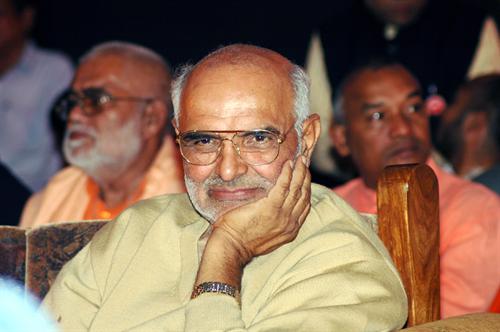
Sahib Singh Verma (15 March 1943, Mundka Village, Outer Delhi – 30 June 2007) was an Indian politician and the former senior vice-president of the Bharatiya Janata Party. He served as Chief Minister of Delhi (1996–1998) and was member of 13th Lok Sabha, Parliament of India (1999–2004).He also served as the Union Labour Minister of India.

He died on 30 June 2007, when his car collided with a truck near Jonaicha khurd, Shahajahanpur on the Jaipur-Delhi highway (NH-8).

Sahib Singh was born in a Hindu JAT[3] family of Lakra clan, on 15 March 1943 in Mundka village, Delhi to Mir Singh, a farmer, and Bharpai Devi.

He began his socio-political journey as a volunteer in the Rashtriya Swayamsevak Sangh and later climbed the ranks in politics. He had also served the World Jat Aryan Foundation, as its former president.

He has a PhD degree in Library Science, and started work as librarian in Bhagat Singh College, Delhi. He also holds a master’s degree in Arts, (M.A.) and also in Library Science from Aligarh Muslim University.

Married in 1954 to Sahib Kaur, he has two sons and three daughters. His son Pravesh Verma was the BJP candidate in the 2013 Delhi assembly election for Mehrauli & won the seat by defeating Delhi Vidhan Sabha Speaker Yoganand Shastri.In Indian general election, 2014,Pravesh Verma won the election from West Delhi Lok Sabha Constituency by a record margin of 2,68,586 votes.

In 1977 he was elected to the Municipal Corporation of Delhi and took the Oath as a Councillor by the hands of legendary Freedom Fighter Guru Radha Kishan.

Initially won as a Janata Party candidate he was re-elected on a BJP ticket. He became the Education and Development Minister in the Delhi government in 1993. In 1996, after Madan Lal Khurana was embroiled in a corruption crisis, Sahib Singh became the Chief Minister of Delhi despite Khurana being acquitted by the courts. Singh served as CM for two and a half years, facing increasing rivalry from Khurana. Following an onion price crisis, he was replaced by Sushma Swaraj.

Subsequently, he won the Lok Sabha elections, 1999 from Outer Delhi with a margin of over two lakh votes. In 2002, he became Minister of Labour in the Vajpayee government, and was known as “bull in a China shop” for standing up against the bureaucrats against lowering the Provident Fund interest rate. However, he was defeated in the 2004 polls.

Verma was respected among the teacher community of Delhi. He was the owner of a national Hindi daily newspaper called Haribhumi.

He died in a road accident in Rajasthan. Verma was returning to Delhi after laying a foundation stone for a school in Neem Ka Thana in Sikar district.

165 total views, no views today
standard

Dinshaw Maneckji Petit

Sir Dinshaw Maneckji Petit, 1st Baronet (30 June 1823 – 5 May 1901), Parsi entrepreneur and founder of the first textile mills in India. He was also the grandfather of Rattanbai Petit Jinnah, who later became the wife of the founder of Pakistan, Mr. Mohammed Ali Jinnah.

As broker to European firms he amassed a large fortune during the period of speculation in Bombay at the time of the American Civil War. He founded the Manackji Petit Spinning & Weaving Mills.

In Petit founded the “Persian Zoroastrian Amelioration Fund” with the aim of improving the conditions for the less fortunate Zoroastrian co-religionists in Iran. The fund succeeded in convincing a number of Iranian Zoroastrians to emigrate to India (where they are today known as Iranis), and may have been instrumental in obtaining a remission of the jizya poll tax for their co-religionists in 1882.

In 1886 he became a member of the governor-general’s legislative council where he was criticised for playing a pro-colonial role despite being a non-official nominee to the council.He was referred to as a “gilded sham” and a “magnificent non-entity ” by the nationalists. He devoted his wealth to philanthropic objects, among the public and private charities which he endowed being the Towers of Silence and fire temples of the Parsi, a hospital for animals, a college for women, and the Petit hospital.

For the advancement of technical education, Sir D. M. Petit also donated premises worth Rs. 3,00,000 at Byculla, Bombay to the famous Victoria Jubilee Technical Institute (VJTI) (recognised by the Government of Bombay as the Central Technological Institute, Bombay Province). In winter 1923, that institute relocated to its present location in Matunga, Bombay.

He was knighted in 1887, created a baronet in 1890, and died in 1901.

The Petit surname is not traditionally Parsi and had come about in Sir Dinshaw’s great grandfather’s time in the 18th century. He had worked as a shipping clerk and interpreter for the British East India Company. French merchants who dealt with the lively, short Parsi clerk called him ‘le petit Parsi’.

Sir Dinshaw was survived by Sir Dinshaw Petit (2nd Baronet). A posthumous portrait of the 1st Baronet was painted by Sir James Linton.

120 total views, no views today

standard

Chris Squire

Chris Squire, the bassist and co-founder of the progressive rock band Yes who recently announced he had leukemia, has died, according to a statement from his band members on Sunday. He was 67.

Squire is survived by his wife, Scotland, and several children.

160 total views, no views today

standard

Sanjit Bedi

Television actor Sanjit Bedi popularly known as Dr Omi in popular television show Sanjeevani passed away Tuesday at a Mumbai hospital.
The actor was reportedly suffering from a brain ailment following which he was in coma for a long time. The actor is survived by his wife.

155 total views, no views today

standard

V. V. Giri

Varahagiri Venkata Giri (About this sound pronunciation ( 10 August 1894 – 23 June 1980), commonly known as V. V. Giri, was the fourth President of the Republic of India from 24 August 1969 to 24 August 1974.

Born in Berhampur, Odisha, Giri completed his education at Khallikote Autonomous College(Established-1878), Berhampur and the University College, Dublin. Expelled from Ireland in 1916, Giri returned to India where he joined the Indian National Congress Party and became active in the trade union movement. He was a founding member of the All India Railwaymen’s Federation and twice president of the All India Trade Union Congress. Elected to the Imperial Legislative Assembly in 1934, he became a member of the Madras Legislative Assembly in 1937 and served as Minister for Labour until 1937, a portfolio he held again in 1946.

Appointed India’s High Commissioner to Ceylon in 1947, Giri became a Member of Parliament in 1951 and served as Union Minister for Labour under Prime Minister Nehru during 1952-1954. Having served as Governor of the states of Uttar Pradesh, Kerala and Mysore between 1957 and 1967, he was elected Vice President of India in 1967. Following the death of President Zakir Hussain, Giri also served as Acting President of India from 3 May 1969 to 20 July 1969. In the Presidential election of 1969, he won as an independent candidate defeating Neelam Sanjiva Reddy, the nominee of the ruling Congress Party.

As President, Giri subordinated the office of the Presidency to the Prime Minister and came to be known as a rubber stamp President. Giri was succeeded by Fakhruddin Ali Ahmed as President in 1974. After the end of his term, Giri was honoured with the Bharat Ratna. Giri died in 1980.

Giri was born in a Telugu Brahmin family in Berhampur in the Ganjam district of Odisha. His father, V V Jogayya Pantulu, was a successful lawyer and political activist of the Indian National Congress. Giri’s mother Subhadramma was active in the national movement in Berhampur during the Non Cooperation and Civil Disobedience Movements and was arrested for leading a strike for prohibition during the Civil Disobedience Movement.

Giri was married to Saraswati Bai and the couple had 14 children.

Giri completed his initial education at the Khallikote College in Berhampur. In 1913 he went to Ireland to study law which he did at the University College Dublin between 1913-1916. His association with the Sinn Féin movement and its leaders including Éamon de Valera and his suspected role in the Easter Uprising led to his expulsion from Ireland in 1916.

Upon returning to India in 1916 Giri enrolled at the Madras High Court. He also became a member of the Congress party, attended its Lucknow session and joined the Home Rule Movement of Annie Beasant. Giri abandoned a flourishing legal career in response to Mahatma Gandhi’s call for a Non-Cooperation Movement in 1920. In 1922, he was arrested for the first time for demonstrating against the sale of liquor shops.

Giri was closely associated with the labour and trade union movement in India throughout his career. Giri was a founding member of the All India Railwaymen’s Federation which was formed in 1923 and served as its General Secretary for over a decade. He was elected president of the All India Trade Union Congress for the first time in 1926. Giri also founded the Bengal Nagpur Railway Association and in 1928 led the workers of the Bengal Nagpur Railway in a non violent strike for the rights of retrenched workers. The strike succeeded in forcing the British Indian government and the management of the railway company to concede the workers’ demands and is regarded as a milestone in the labour movement in India. In 1929, the Indian Trade Union Federation (ITUF) was formed by Giri, N. M. Joshi and others with Giri as the president. The split with the AITUC came about over the issue of cooperating with the Royal Commission on Labour. Giri and the ITUF leadership of liberals decided to cooperate with the Commission while the AITUC decided to boycott it. The ITUF merged with the AITUC in 1939 and Giri became president of the AITUC for a second time in 1942.

Giri was the Workers’ Delegate of the Indian delegation at the International Labour Conference of the ILO in 1927. At the Second Round Table Conference, Giri was present as a representative of the industrial workers of India. Giri worked towards getting the trade unions to support the freedom movement in India and was twice president of the AITUC which was closely allied with the Indian National Congress.

Giri became a member of the Imperial Legislative Assembly in 1934. He remained its member until 1937 and emerged a spokesman for matters of labour and trade unions in the Assembly.

In the General Elections of 1936, Giri defeated the Raja of Bobbili to become a member of the Madras Legislative Assembly. Between 1937-1939, he was Minister for Labour and Industry in the Congress government headed by C Rajagopalachari. Giri was appointed Governor of the National Planning Committee of the Indian National Congress in 1938. In 1939, the Congress ministries resigned in protest against the British decision to make India a party in the Second World War. Having returned to the labour movement, Giri was arrested and spent 15 months in prison till March 1941.

Following the launch of the Quit India Movement, Giri was imprisoned again by the colonial government in 1942. He remained in prison when the AITUC met in Nagpur in 1943 where he was the president elect. Giri served his sentence in the Vellore and Amaravathi prisons. Giri remained in prison for three years, his longest sentence, until his release in 1945.

In the General Elections of 1946, Giri was reelected to the Madras Legislative Assembly and became a minister again in charge of the labour portfolio under T. Prakasam.

Between 1947 – 1951, Giri served as India’s first High Commissioner to Sri Lanka. In the General Elections of 1951, he was elected to the 1st Lok Sabha from Pathapatnam Lok Sabha Constituency in the Madras State.

On being elected to Parliament, Giri was appointed Minister of Labour in 1952. His policy initiatives as minister gave rise to the Giri Approach in industrial dispute resolution. The Giri approach emphasizes negotiations between the management and workers as the means for resolving industrial disputes. It holds that the failure of such negotiations should lead not to compulsory adjudication but to further negotiations through conciliation officers. However, differences with the government over patronage to trade unions, trade union and government opposition to the Giri Approach and the government’s decision to reduce the wages of bank employees led him to resign from government in August 1954.

In the General Elections of 1957, Giri lost from the Parvatipuram double-member constituency. Giri played an important role in founding the Indian Society of Labour Economics (ISLE). In June 1957, he was appointed Governor of Uttar Pradesh.

Between 1957-1967, Giri served as governor of Uttar Pradesh (1957–1960), Kerala (1960–1965) and Karnataka (1965–1967).

Giri was sworn in as the second Governor of Kerala on 1 July 1960.As Governor, Giri’s active voicing of Kerala’s fiscal needs with the Planning Commission led to the state being allocated significantly more funds in the Third Five Year Plan.When defections from the ruling Congress Party reduced the government to a minority, Giri recommended the imposition of President’s Rule in Kerala after determining that an alternative government could not be formed. A hung assembly resulted from the elections to the Kerala Legislative Assembly in 1965. Since no party had a majority and no alliances commanding a majority could be formed, Giri again recommended the dissolution of the assembly and the imposition of President’s Rule in the state.

Giri was elected the third Vice President of India on 13 May 1967, a post he held for nearly two years till 3 May 1969. Giri was the first Vice President to not complete his full term in office on account of being elevated to the office of the President and was the third Vice President to be elected to the Presidency.

Following the death in office of President Zakir Hussain on 3 May 1969, Giri was sworn in as acting President the same day. Giri resigned from his post on 20 July 1969 to contest the Presidential elections as an independent candidate. Immediately before resigning, Giri, in his capacity as Acting President, promulgated an ordinance that nationalised 14 banks and insurance companies. He was succeeded as Acting President by Mohammad Hidayatullah, the Chief Justice of India.

The election of a new President became a contest between the Prime Minister Indira Gandhi and the old guard of the Congress Party known as the Syndicate. The All India Congress Committee decided to support Neelam Sanjiva Reddy as the presidential candidate, disregarding the Prime Minister’s opposition. Giri, who was Vice President, resigned and decided to contest as an independent candidate. Prime Minister Gandhi then decided to support him, endorsing a “vote of conscience” that allowed Congress legislators to vote for Giri. The election, held on 16 August 1969, witnessed a contest between Reddy, Giri and the opposition candidate C D Deshmukh. In the closely fought election V V Giri emerged victorious, winning 48.01 per cent of the first preference votes and subsequently getting a majority on counting the second preference votes. In the final tally, Giri had 420,077 votes against the quota of 418,169 votes required to be elected President.

Following Giri’s election, an election petition was filed in the Supreme Court of India contesting its validity on the grounds of having used corrupt practices to influence voters. Giri, unusually for an incumbent President of India, chose to appear in person before the Court where he was examined as a witness. The Court ultimately dismissed the petition and upheld Giri’s election as President.

As President of India Giri led 14 state visits to countries in South and South East Asia, the Soviet bloc and Africa.
Giri was sworn in as President of India on 24 August 1969 and held office till 24 August 1974 when he was succeeded by Fakhruddin Ali Ahmed. On his election, Giri became the only President to have also been an Acting President and the only person to be elected President as an independent candidate.

As President, Giri unquestioningly accepted Prime Minister Indira Gandhi’s decision to sack the Charan Singh ministry in Uttar Pradesh and advised her to go in for early elections in 1971. The ordinance abolishing privy purses and privileges of the erstwhile rulers of India’s princely states was promulgated by Giri after the government’s original amendment was defeated in the Rajya Sabha. His advice to Prime Minister Gandhi against the appointement of A.N. Ray as the Chief Justice of India superseding three judges senior to him was ignored by her as was his warning that a crackdown on striking railwaymen would only exacerbate the situation. As President, Giri made 14 state visits to 22 countries in South and South East Asia, Europe and Africa.

Giri is regarded as a President who completely subordinated himself to the Prime Minister and has been described as a “Prime Minister’s President”, a loyalist President and a rubber stamp President under whom the independence of the office eroded. When Giri’s term ended in 1974, Prime Minister Indira Gandhi chose not to renominate him to the Presidency and instead chose Fakhruddin Ali Ahmed who was elected in the Presidential election of 1974.

Giri was honoured with India’s highest civilian award, the Bharat Ratna, in 1975 for his contributions in the area of public affairs. As President, Giri had suo motu conferred the Bharat Ratna on Prime Minister Indira Gandhi in 1972. Giri was in turn conferred the Bharat Ratna in 1975 on the recommendation of Prime Minister Gandhi, in an act seen as a quid pro quo measure. Giri was the fourth of five of Presidents of India to have been conferred the Bharat Ratna.

Giri died of a heart attack in Madras on 24 June 1980. He was given a state funeral the next day and a week-long mourning period was declared by the Government of India. Rajya Sabha, of which Giri had been ex-officio chairman as Vice President of India, adjourned for two days as a mark of respect to him.

60 total views, no views today

standard

Harindranath Chattopadhyay

Harindranath Chattopadhyay (2 April 1898 – 23 June 1990) was a multi talented personality as an Indian English poet, a dramatist, an actor, a musician and a member of the 1st Lok Sabha from Vijayawada constituency. He was the younger brother of Sarojini Naidu, the first woman President of Indian National Congress and Virendranath Chattopadhyay, a revolutionary.

Born in Hyderabad (erstwhile Hyderabad State, present day Telangana) in a Bengali Hindu Kulin Brahmin family to Aghornath Chattopadhyay, a scientist-philosopher and educationist, and Barada Sundari Devi, a poetess and singer, he is famous for poems like Noon and Shaper Shaped. His father was a Doctorate of Science from Edinburgh University, settled in Hyderabad State, where he founded and administered the Hyderabad College, which later became the Nizam’s College in Hyderabad. His mother was a poetess and used to write poetry in Bengali. His other interests were politics, music, theatre and cinema. He was awarded Padma Bhushan in 1973. He married Kamaladevi Chattopadhyay, a Socialist and leader of Women, who created the All India Women’s Conference, the Indian Cooperative Union and also was the inspiration for the All Indian Handicraft’s Board, a body which revived many Indian handicrafts, decimated by the Industrial Revolution in Britain in the 19th century. (Pottery and Weaving) their son Ramakrishna Chattopadhyaya is in Banagalore, India, today. Their divorce marked the very first legal separation granted by the courts of India.

Harindranath Chattopadhyay often recited his poem Rail Gaadi on All India Radio (Akashavani). The song was memorably sung by Ashok Kumar in the film Aashirwad. He himself wrote the lyrics, composed the music and sang a few songs, notable among which were Surya Ast Ho Gaya and Tarun Arun Se Ranjit Dharani. He also penned a number of poems for children in Hindi. His poems were appreciated even by the Nobel Laureate Rabindranath Tagore.

In 1951 Lok Sabha elections Harindranath Chattopadhyay won from Vijayawada Lok Sabha constituency in Madras State as an independent candidate, supported by the Communist Party of India. He was the member of the 1st Lok Sabha from 14 April 1952 to 4 April 1957.

His most famous acting role was in the movie Bawarchi (The Chef) which was made in 1972 ; it was adapted in Hindi by Gulzar from the Bengali film “Galpo Holeo Satyee”, directed by Tapan Sinha. He enacted the role of strict and regimented patriarch of the house, where his sons, daughter in laws and grand children lived in a joint family and still respected and abided by his rules. His cameo in two Satyajit Ray films, “Goopi Gyne Bagha Byne” [as the wizard ‘Barfi’] and “Sonar Kella” [as the human encyclopaedia – ‘Sidhujyatha] – has etched him in permanence.

He died in 1990.

60 total views, 10 views today

standard

Nek Chand Saini

Nek Chand Saini was a self-taught Indian artist, known for building the Rock Garden of Chandigarh, an eighteen-acre sculpture garden in the city of Chandigarh, India.

He hailed from Shakargarh region (now in Pakistan) of district Gurdaspur. His family moved to Chandigarh in 1947 during the Partition. At the time, the city was being redesigned as a modern utopia by the Swiss/French architect Le Corbusier. It was to be the first planned city in India, and Chand found work there as a roads inspector for the Public Works Department in 1951. He was awarded the Padma Shri by Government of India in 1984.

In his spare time, Chand began collecting materials from demolition sites around the city. He recycled these materials into his own vision of the divine kingdom of Sukrani, choosing a gorge in a forest near Sukhna Lake for his work. The gorge had been designated as a land conservancy, a forest buffer established in 1902 that nothing could be built on. Chand’s work was illegal, but he was able to hide it for eighteen years before it was discovered by the authorities in 1975. By this time, it had grown into a 13-acre (5.3 ha) complex of interlinked courtyards, each filled with hundreds of pottery-covered concrete sculptures of dancers, musicians, and animals. Made from recycled materials, Chand builds up the mass with a cement and sand mix before adding a final coating of smoothly burnished pure cement combined with waste materials such as broken glass, bangles, crockery, mosaic and iron-foundry slag.

His work was in serious danger of being demolished, but he was able to get public opinion on his side, and in 1986 the park was inaugurated as a public space. Nek Chand was given a salary, a title (“Sub-Divisional Engineer, Rock Garden”), and a workforce of 50 labourers so that he could concentrate full-time on his work. It even appeared on an Indian stamp in 1983. The Rock Garden is still made out of recycled materials; and with the government’s help, Chand was able to set up collection centres around the city for waste, especially rags and broken ceramics.

When Chand left the country on a lecture tour in 1996, the city withdrew its funding, and vandals attacked the park. The Rock Garden Society took over the administration and upkeep of this unique visionary environment. The garden is visited by over five thousand people daily, with a total of more than twelve million visitors since its inception.

295 total views, no views today

standard

Christopher Lee

Christopher Lee was born in London in 1922 to one of the oldest families in Europe. He attended Eton College and Wellington College, where he studied Greek and Latin. During World War II, he served in the Royal Air Force and Special Forces and was decorated for distinguished service.

Christopher Lee made his film debut in the Gothic romance Corridor of Mirrors in 1947. Throughout the next decade, he made nearly 30 films, usually playing stock characters in action films. Lee’s first film for Hammer, the legendary horror production company, was The Curse of Frankenstein (1957), in which he played Frankenstein’s monster. In 1958, Lee made his first of many appearances as Dracula in Horror of Dracula (U.S. title).

After Horror of Dracula, Christopher Lee reprised his role as the legendary vampire and played other horror roles in dozens of Hammer productions, right up until the company’s last horror film, To the Devil a Daughter, in 1976. With Hammer and other production companies, Lee appeared in nearly 50 horror films from 1959 to 1976, and portrayed Dracula in nearly 10 of them. Lee’s other memorable horror films of this era include Corridors of Blood, The Two Faces of Doctor Jekyll, Dracula Price of Darkness and Taste the Blood of Dracula. Lee also had recurring roles as Fu Manchu and Sherlock Holmes, played Scaramanga in the James Bond film The Man with the Golden Gun, and had the title role in 1959’s The Mummy.

Lee later shied away from horror roles, instead appearing in films such as How the West Was Won and the Steven Spielberg WWII comedy 1941 in the 1970s, among many others. In the 1990s, Lee also returned as Sherlock Holmes in Incident at Victoria Falls and Sherlock Holmes and the Leading Lady. In 2001, Lee’s career experienced a major revival with his role as Saruman in The Lord of the Rings: The Fellowship of the Ring, and its sequel The Lord of the Rings: The Two Towers in 2002. The next year, Lee appeared in Star Wars Episode II: Attack of the Clones, yet again as a memorable villain, Count Dooku, and reprised the role in Star Wars Episode III: Revenge of the Sith (2005). Lee was also tapped to star in 2012’s The Hobbit: An Unexpected Journey and 2013’s The Hobbit: There and Back Again, also as Saruman.

305 total views, no views today

Tribute to George Mallory & Andrew Irvine

140 total views, no views today

standard

William G. McGowan

William G. McGowan (December 10, 1927 – June 8, 1992) was an American entrepreneur, and founder and chairman of MCI Communications. He played an important role in the breakup of AT&T while growing MCI into US$9.5 billion in revenue entity that controlled 16% of the American domestic and international long distance market.

McGowan was born in Ashley, Pennsylvania, the third of five children. After graduation from high school he joined the US Army and served as a medic for two and a half years. After an honorary discharge from the military he attended King’s College, Pennsylvania and received a degree in chemical engineering. He then attended Harvard Business School, graduating in 1954. After graduation from Harvard, McGowan began operating a consulting firm that specialized in rescuing troubled companies in the garment district of New York City. After a year of operation, his consulting agency branched out into venture capital. In the role of venture capitalist, McGowan dealt with firms developing ultrasonic cleaning technology and electro-mechanical devices.

In 1968, McGowan was contacted by MCI due to his expertise in raising venture capital. Based on this contact, he made a US$50,000 investment in the fledgling business and was made chairman of Microwave Communications of America, a predecessor to MCI Communications. In his role as chairman, McGowan raised capital for the growing company and set up fifteen of the seventeen regional carriers that would form the basis of MCI’s initial communications network. In 1971, he executed a reorganization of Microwave Communications of America and its seventeen subsidiaries to form MCI Communications.

In his role at MCI, McGowan established a reputation as a hard worker by routinely working fifteen-hour days. He was also a three-pack-a-day smoker and drank over twenty cups of coffee each day until his first heart attack. As leader of MCI, he labored for several years to gain the financing and regulator approvals required to begin full operations. Following the filing of MCI’s 1974 lawsuit against AT&T, McGowan began cooperation with the U.S. Department of Justice which eventually led to a 1982 agreement leading to the divestiture of AT&T and the opening of the long distance telephone market within the United States.

McGowan married Sue Ling Gin, a Chicago entrepreneur, in a private ceremony in Virginia Beach on July 5, 1984. They decided to keep their marriage secret for a year as Sue Ling wanted credit for success in her own right and not as the wife of McGowan.

On December 21, 1986 McGowan experienced a heart attack. His medical problems resulted in his receiving a heart transplant on April 25, 1987.[4] McGowan returned to his duties as MCI chairman after a six month recovery, where he remained until his death on June 8, 1992 from another heart attack.

McGowan’s philanthropy continues on in many forms. He established what is now the McGowan Institute for Regenerative Medicine at the University of Pittsburgh Medical Center due to his heart condition. Just before his death, he also established the William G. McGowan School of Business at King’s College. Shortly after his death, the William G. McGowan Charitable Fund was founded in his name.

DePaul University in Chicago has two science and research buildings named for the McGowan family including Mr. McGowan and his late brother, a Catholic priest. His charitable fund provides tuition assistance and financial aid grants for selected students. The Rochester Institute of Technology created the Center for Telecommunications and the McGowan Student Commons located in the new College Applied Science and Technology building. The National Archives in Washington D.C. established the William G. McGowan theater in his honor.

Mr. McGowan was inducted into the Junior Achievement U.S. Business Hall of Fame in 1992.

McGowan has a fellowship foundation for second year MBA students. The foundation will pay for the second year tuition at a top business school.

180 total views, 10 views today

1234567891011›»